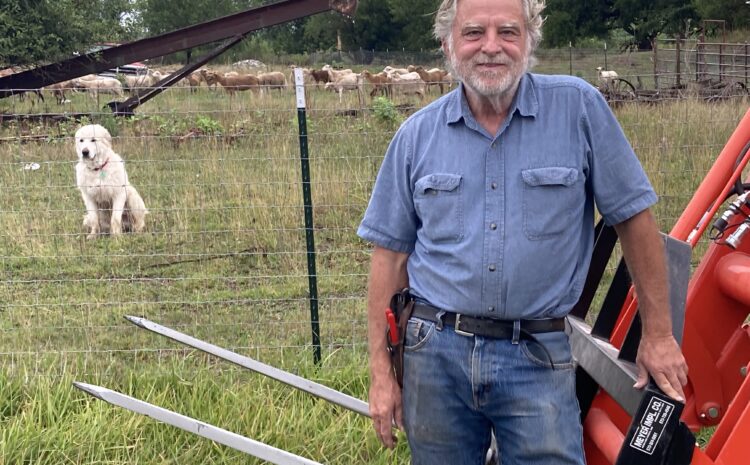
Joe Maxwell with the Farm Action Fund on Collusion, Corruption, the Iran War, Tariffs, Corporate Power, Imported Beef, Iowa Candidate Endorsements, and more…
I recently interviewed Joe Maxwell with the Farm Action Fund on what the organization does. Our discussion was wide-ranging, informative, and by the end of the interview I found myself grateful that they are doing the work they are doing in monitoring corporate power and government policy.
Before I could get this column finished, President Trump issued an executive order that has farmers and ranchers pushing back. According to Politico:
President Donald Trump signed a proclamation on Wednesday that aims to lower ground beef prices by dramatically boosting imports from other countries despite outrage from Republicans and allies in the beef industry.
Trump’s proclamation will remove tariffs from 300,000 metric tons of imported lean beef trimmings for 90 days. He said the countries supplying the beef would sell it at 25 percent below current market prices, as he first announced on Truth Social Friday.
Below you will find our video, followed by a lightly edited transcript. Yesterday Joe released a social media clip about Trump’s executive order. I provide a link to that clip below, followed by a lightly edited transcript.
As of this writing, neither Trump nor the USDA are telling the public where the beef is coming from.
Joe has an idea about the country of origin.
Me: Welcome, everybody. Thanks for joining this Zoom call. I’m speaking here with Joe Maxwell with the Farm Action Fund. Welcome, Joe. Thanks for agreeing to come on.
Joe: Yeah, Robert, thank you so much for having us. It’s great to be on.
Me: Could you give us a minute or so background on you, and then on the Farm Action Fund?
Joe: Yeah, well, I’m Joe Maxwell. I am the president of Farm Action Fund, and I am a farmer from the state of Missouri. I’m a fourth-generation farmer. I’m a former legislator here in our state and a lieutenant governor, so I’ve spent a lot of my adult life in public policy and down here on the farm in rural Missouri.
Me: Okay, and so tell us a little bit about the Farm Action Fund.
Joe: Now, Farm Action Fund- we formed Farm Action Fund because we’ve really felt strongly as farmers; it’s a farmer-led organization. It has a lens up and down the supply chain. And when we came together, we thought that there just really wasn’t an organization that was looking up and down the supply chain at the various abuse issues, monopoly power, corporate power that was strangling the farmers and short-paying us on the other side, as well as harming consumers, our smaller businesses, and our hometowns. And so, we felt there was a need to have an organization, and we formed it. It’s a watchdog over corporate abuses within those supply chains for food and agriculture, as well as we’re a watchdog of government policies and actions that sometimes empower those corporations and their extractive economic model that they take out on rural America.
Me: Okay, so I’m just sitting here thinking all the stuff that you’re having to monitor, it must…there’s just so much flying around about agriculture, agricultural policy, you know, supply issues, input costs, tariffs. I mean, that’s incredible. How do you focus?
Joe: Yeah, that’s a good point. Since the Trump administration, it clearly has become almost overwhelming. You mentioned several…you didn’t include war and the closing of a strait. So, we look at how those types of actions- tariffs, or the war, or a hurricane, a fire in a beef plant in Nebraska. When things like that happen, supply disruptions happen.
We quickly look to see if corporations, because of the heavy concentration in the market, are they taking advantage of that? Is the supply model working, or are they price gouging? Are they abusing the market? So, we look for triggers in the market, and then we take a deep dive into those triggers.
I’ll give you an instance. In 2019, there was a fire at a Tyson plant in Holcomb, Nebraska. It idled 6% of the kill capacity of cattle. So, that’s a trigger for us. What’s going on? What are the reactions of the corporations? What’s the impact on rural communities, farmers, and the consumer? Immediately, the whole industry said, we don’t need your cattle; we had a fire. Not just the one plant, but the whole industry, and they dropped cattle prices. Immediately, they said, oh, we had a fire, we don’t have any beef.
And so all the grocers had to run out and pay higher prices for beef. So, the reality… and then, therefore, consumers paid more for beef, because 6% of the cattle killed was idled. The results of our research indicated that three weeks after the fire, there was… about 5,000 cattle killed less than the three weeks before the fire.
The reality was, they were able to absorb that 6% hit, almost absorb all of it. But yet, it was a historic spread between the price a farmer is paid, or a rancher, and the price the consumer had to pay. Historic. They gouged the consumer and short-paid the farmer.
So, we look at… there’s only four companies that control 85% of the beef in the United States, right? Four companies, 85% of the beef. When I started farming in Missouri, it was about 36%. So, four companies control 85%. They no longer compete with each other. They can make more money colluding and setting prices.
You see, I didn’t mention it, but I have an ag economics degree. One of the very basics, first year, in college at the University of Missouri, you learn the fundamentals of the capitalist system, right? The laws of economics. And one of those fundamentals is competition.
Well, you see? Our system doesn’t work if there’s not competition. These companies have no one to compete with. They’re too big. We’ve allowed them to get that big, and that’s what they could do to consumers. That’s just one instance to show you what we look for, how we make the analysis, and what it is on the other end that we’re able to prove. The market doesn’t work for farmers or consumers in this economic system, because competition is lacking, and it’s lacking in almost every sector of agriculture and food.
Me: Well, and here we might want to remind some of our listeners that aren’t farmers or involved with farming that farmers and ranchers are price takers. They don’t set their prices. That’s important to know, that it’s…
Joe: Yes, it is.
Me: Yeah, could you explain that a little bit, and the implications?
Joe: Well…farmers raise various commodities. Corn, soybeans, wheat, produce, cattle, sheep, hogs, chickens, eggs. And we raise those. And most of those markets, except for those that are selling to our neighbors at farmers markets, we’re holding those goods up. We’re saying, here’s a…calf…how much will you Packers pay me for this calf this week?
Cattle are a perishable item. When they get big enough, you gotta sell them. So, that day, that week, you go into the market, and you have to take whatever it is that a packer, a meat packer, will pay you, regardless of the price of the beef the consumer’s gonna pay.
When you have a tariff that comes in, increases your input cost on machinery, repairs, whatever it might be, there’s no way to pass that on. When you have diesel fuel prices skyrocketing because of a war in Iran, or fertilizer prices skyrocketing. Because a straight… a straight is closed, then there’s nowhere to pass that on. You have to eat your additional cost as a farmer. You can’t pass it on, because you’re dependent upon the big processors, meat packers, soybean crushers, millers, the others, to tell you what the price is going to be that day or that week when you offer your commodity for sale.
Me: Okay, and so we’ve got this big, giant, you know, we’ve got these few big, giant corporations. And you know that they’re price gouging. Whenever there’s an opportunity to price gouge, they’re gonna do it. I mean, that’s just the nature of capitalism, that they’re going to do it. Most of these companies don’t care where the beef or the soybeans or wherever come from around the world, and so they’re just… they’re just gonna gouge the American farmer if you let them.
Joe: Yeah, and the consumer. And I’ll step back just a minute on one thing that you said, but you’re exactly right, and these companies are worldwide. I mean, JBS is one of the top cattle buyers in the United States, a beef producer. They’re Brazilian. They’re all over the world.
No different than Tyson, a U.S. company. It’s all over the world, with its poultry production and its other production. These companies don’t have any loyalty to the bounds of any country, border of any country. Their loyalty is to how much money they can make that day in the market.
It is not… just a subtle difference in how you would say it…the capitalist system… would not let it… if it was functioning properly, and had the rails on, and the protections that rules are needed to keep the rails on.
They couldn’t get away with it. If they went to price gouge the consumer, a competitor would step in and take up that market share. Competition is the checks and balances within that market that keeps a company from overcharging. If you’re charging too much then, then another company says, well, I can do it for less, and offer their goods up. But no one’s competing today. Four companies… two companies control all the potash, a fertilizer product, in North America.
Give you an example, USDA, was shocked here several years ago. A few years ago, avian flu hit. This is something we tracked and did push for investigations on. Avian flu hits, it kills off about 7% of the flock. It’s real.
But eggs went up about 300%. Corporate profits went up tenfold. Net profits tenfold. They used avian flu, a loss of about 7% of their flock, in order to gouge the consumers. USDA, earlier that year, said, oh, prices are above what they should be; someone will step in. This is in their report, USDA’s market report. Someone will step in.
In December of that year, the USDA said, well, we don’t understand when no one stepped in. And I’m thinking, I know why, and if your economists would just pause long enough.
There’s no competition. Why would you want…if no one’s putting pressure on you to lower your price, why would you lower your price? You’re just gonna say, if you’re one of the big four, heck, I’ll just charge the same thing. And that’s what they do. So, our system, the economic, capitalist economic model that we have… I’m a capitalist, but the fact is, it needs rules. And over the last 40 years, both Democrats and Republicans alike have taken the rules off.
And it’s driving 63 farmers a day off the farm. That’s the average. And we got families that can’t afford their food.
Me: Well, and, you know, I learned something recently, and correct me if I’m wrong, you brought up the bird flu, and the killing off, what, 7% of the flocks. The corporations didn’t have to eat that. They’re indemnified, aren’t they? Doesn’t the government pay for that?
Joe: Oh, that’s a great point.
Me: We pay for it.
Joe: Yep. We, the taxpayers. They’re indemnified, and THEN… This is something we called out. I mentioned watching government. So… President Biden… his administration, put a billion dollars into local foods purchasing for schools and food banks, and those… that billion dollars had to be used to purchase produce and other foods from local markets. So you couldn’t go and buy from the JBSs or the Dole’s or, you know, the Taylor Farms.
The billion dollars had to be spent supporting local food. And in feeding the neighbors.
Secretary Rollins met with Cal-Maine Foods, the largest egg producer in the United States. Met with them, and shortly thereafter, took that billion dollars, even though they had the indemnity program, like you talked about, took that billion dollars and gave it to the egg industry to help them with their bios… 400 million of them went to help their biosecurity. So not only were they… we also helped them pay to upgrade their systems.
And we did it by taking a billion dollars away from schools, food banks, and markets for small farmers.
Me: So I think, and you can tell me if I’m wrong again, but I think that, in many ways, these big agribusinesses are actually, in part, anti-farmer, in the sense that I have a buddy who ran a local co-op, and he told me, boy, I wish I only had to deliver anhydrous to 500 farms, rather than the 1,500 farms I went to. If only we were more consolidated, it would be a lot easier for me and my co-op to be more profitable. And so the shrinkage and the combination of fewer farms is actually in the… isn’t in the best interest of anybody, farmers, people, except for the agricultural… big agricultural corporations. They actually want fewer farmers, which to me is anti-farming. Am I right?
Joe: Yeah. Absolutely. The big, you know, God bless your co-op friend. I’m all for co-ops. But except for Dairy Farmers of America, most American co-ops are small potatoes compared to the very large agribusinesses that I’m referencing.
Nutrien is a competitor to that co-op. Nutrien is one of the very largest manufacturers of fertilizer and phosphate in the United States. They decided, they’re a Canadian firm, they decided they were going to go into the retail business, and they’re now competing against your co-op.
So it’s not just the farmers that are getting screwed, but those small co-ops, those independent agri-services are going out of business as well. The other thing that the co-ops have found that your friend needs to think about, once they’re down to 500 farmers instead of 5,000, that farmer decides it doesn’t even need a co-op; it’s gonna buy direct.
It has enough purchasing, enough needs; it now can buy a whole tractor-trailer load, or a railroad car load. And it just laughs at your local co-op, and they’re going broke.
I mean, look at our local elevators and others. You know, this idea that, yeah, I want fewer, I want consolidation because I want to deal with less. Banks like that, right? Because I can loan $10 million or $20 million, doesn’t cost the bank any more than if they had you know, took 10 farmers to do that. They’d only processed the paperwork once.
But ultimately, what happens is, is that there’s not enough farmers left in a community to have a community, right? I mean, that’s what we’ve seen, the hollowing out of rural America. The loss of farmers, the loss of tax base, our schools consolidate. Our rural hospitals close, jobs disappear when that rural co-op that you discussed ultimately goes broke against the pressure of these very large corporations
Jobs are lost, the hollowing out of America through the extractive process, economic model that we’ve allowed to occur in the United States. And that’s why Farm Action Fund has launched the Rural Independence Initiative.
And we’re looking for candidates that- this is not a Democrat or Republican problem. Both parties got us here. I could give you the history, and…but it’s going to take both parties to get us out of this, and we’ve got to look at this in an honest way, and take on these big corporations and this big money.
Me: Okay, so tell me about the initiative. Share it with us, would you please?
Joe: The Rural Independence Initiative is launched by Farm Action Fund. What we’re working towards is increasing the political capital that will help us have folks in Washington, D.C, that will stand up for people, and independent farmers, and rural communities, and not for these big ag corporations.
Folks that are willing to speak out. Help us change the laws, enforce the laws, and strip the power- this abusive power- away from these corporations that are putting 63 farmers out of business a day, and making it where families can’t feed themselves, or delivering- look at Iowa, the cancer rates, the water quality.
We want folks that’ll stand up to these corporations and to this industrial model. And, bring justice. What we see, and with the Rural Independence Initiative, is over 40 years, it’s been Democrats and Republicans alike that have brought us this type of agricultural and food system.
One that’s bankrupting us, one that has eroded competition, one that’s not responsible for the public health of the citizens. And so… and we also see that anytime there’s a farm bill or some major bill going through, there’s always somebody on both parties votes one way or the other. So the one thing we want to communicate to folks, and the reason to form it, is to begin to have a safe place.
Let’s don’t try to brand ourselves D’s and R’s. That puts us in one camp or the other, and then the big corporations laugh their butt off as we’re fighting over things that really don’t matter as much. We’re seeing our communities dry up.
Me: Okay, and so you’re trying to identify candidates that share that vision, that set of values that you just outlined?
Joe: Yeah, candidates and issues. Candidates that will support the issues, and current elected officials that will support various issues. Give you an example. This was… is bipartisan. Currently, we’re importing more and more beef. Which the president has allowed to happen.
As a matter of fact, he’s encouraged it. He’s opened the door for more beef to be imported. It’s the same… at the time when cattle producers were beginning to see profits on their ranches and their farms. The president wants to lower beef prices at the grocery store.
So he lets the JBSs and the other big international companies bring in more foreign beef. Those companies don’t have to label that beef. Consumers don’t have… can’t know where it comes from, because we have been banned from labeling it product of the USA, and to label it as born, raised, processed, and harvested. We need a mandatory country of origin label.
We have been supporting that. It’s good for transparency for the consumer; it’s good for market opportunity for America’s farmers and ranchers. We’ve been pushing for that issue, and yesterday, in, on Thursday, the 6th, the United States Senate Agriculture Committee, in a bipartisan way, adopted mandatory country of origin labeling in the text of the Farm Bill.
(The bill failed, largely because of Democratic opposition to SNAP components)
On the other side, Bayer Monsanto has been working to get a liability shield. Farmers are on the front line of using these chemicals. And Bayer has been stripping, through the Supreme Court, they have hidden behind the labels that have been approved in Washington, D.C, and don’t have to warn folks about potential harm.
So, failure-to-warn cases have been stripped from farmers and others that have used these products. They can’t seek court justice. They can’t get their day in court because of this Supreme Court decision.
Senator Booker, we’ve been pushing the…we’re not saying do away with glyphosate. I have used it around my farm, as I said here. What we’re saying is, though, if a company, a big corporation, hurts you. Harms you, you should be able to go to court and seek justice.
Me: Absolutely.
Joe: they shouldnt have the power to get the president to side with them, to do an executive order, and then turn the Department of Justice against the people, and on behalf of a German company, and protect them in our Supreme Court.
So, Senator Booker offered an amendment. Unfortunately, that amendment…was only the Democrats voted for it.
But what we know is…
Me: Cory Booker? Yeah, Senator Cory Booker. But what we know is, Democrats and Republicans alike vote for these issues. And so we’re… we’re not seeking to be a Democrat organization or a Republican organization. Both parties got us here. It’ll take both parties to get us out of here. So we’re looking for candidates’ D’s or R’s, that support our values and our issues.
Me: Okay, so this might mean identifying people to run, or identifying people that are doing a good job, making endorsements. You’re making endorsements? I saw something on that the other day.
Joe: That’s right, we…as we have an eye to the marketplace, we have an eye to the government and those that are making decisions. We also keep an eye out there in the election world during the campaigns. Candidates that are running or want to run. Looking at them, talking with their campaigns, identifying those that have the will, to have courage.
Joe: We endorsed Congressman Massey. Now, he didn’t win his primary. But he had… he showed courage. He took up, took on Bayer. He supported mandatory country of origin labeling. He took on check-off, commodity check-off reform. So, we don’t always win, but we’re going to stand with those candidates, either elected officials or new folks running that will stand with our issues and our values.
Me: and Senator Massey from, he was a Republican.
Joe: Congressman.
Me: Yeah.
Joe: Congressman Massey’s a Republican. In Iowa, we have endorsed… it’s just Democrats. We have endorsed in the U.S. Senate race, and in the first and the third, congressional races. And the reason that example was just on legislation that would strip 27% of America farmers of a market.
And that is the… called the Save Our Bacon Act that is led by Senators Ernst and Congresswoman Hinson. And the Iowa delegation has been trying to support what Smithfield, one of the largest hog producers in this country, the largest hog producers want to ban states from being able to set certain standards. In this case, it’s an animal welfare standard.
But their legislation goes much further. It would strip states of being able to set any type of agricultural standard, or any health or safety standard for their people.
So, you know, the big corporations don’t want states to have opinions. They want, because they control Washington, D.C. to a large extent, they want Washington, D.C. to be the decider. And unfortunately, in Iowa, most…the Republicans’ delegation there have been very, very supportive of the largest corporations in the world and their industrial extractive model. So we have endorsed, in the first, in the third, and in the U.S. Senate race.
Me: So, Josh Turek for Senate, Lindsay James (my error—not endorsed), and Christina Bohannon, in the Congressional Districts.
Joe: Sarah Trone, and Sarah Trone Garriott.
Me: Sarah Trone Garriott. Yeah. Okay. So, alright, very good, thank you for that correction. Okay, so…Ashley Hinson, you know, all of our Republican senators and Congressmen and women, they…are always talking about how pro-farmer they are. And…it’s hard to… if you know anything about what’s happening today, with what you’re talking about with Bayer and lawsuits, and consolidation, and just all of the things that you’ve talked about, you don’t have to dig very deeply to see that they aren’t really pro-farmer; they’re pro-big agribusiness.
Joe: That’s right. You know, they’re pro-agribusiness, they’re pro-industrial agribusiness. They’re advancing a model of agriculture and food that encourages consolidation.
It encourages 63 farmers a day to go out of business. We’ve already talked about how agribusinesses oftentimes think that’s in their best interest to have fewer farmers. They support continuing to not expand research and development as it relates to alternatives. They support the, heavily chemically-laden, industrial-based model of production row crops.
You know, I’m not trying to pit one farmer against another. That doesn’t fare very well for us farmers. There’s not enough of us. But the reality is, there are some farmers, about 10% of them, are gaining a lot of ground under the policies that the Iowa delegation, Congresswoman Hinson, and others. What they are pushing, about 10% gain, a lot.
So when they say pro-farmer, it is true there are farmers that are benefit, about 10%. They’re the ones, the chosen ones, I suppose, that ultimately, your friend at the co-op, dreamed of only having that group.
The rest of the farmers are struggling to stay on the farm. I’ll give you an example of policy that they have supported, that supports what I’m saying.
In the Big, Beautiful Bill. And in, in, a provision in the fall or winter, the year before, so, the Republican leadership and the delegation in Iowa pushed legislation that favored the largest farmers in two ways. In the big, beautiful bill, they took the caps off. So, used to be we restricted the amount of money in certain programs that a farmer could receive. They took those off so that big farmers could get more of the money.
And also, they… in distributing some of the funds, the subsidies for farmers, to bail them out of the financial crisis farmers are in. They said if you made 75% of your income off the farm, You’ve got more money than if you made 74% or less.
So the farmer’s struggling, and it was household income. So the farmer’s struggling, and their partner, spouse, whatever, goes to town and gets a job to have healthcare insurance, right? Because that’s not uncommon. Or just to pay the goddang light bill.
Suddenly, your income falls below 75%, you got less money. It only ensured those struggling would struggle further, and it only ensured those that were doing better at 75% had enough cash on hand to buy out their neighbor.
Those are the kind of policies that do help farmers. When they say pro-farmer, there are farmers, the very largest farmers, that just loved them. Because they got more money than what they ever had gotten from government subsidies before. And the rest of the farmers got less.
Me: Okay, well, I could talk with you all afternoon. I have so many questions, but we’re over half an hour, and I want to know, is there anything I didn’t know enough to ask, or anything else you’d like to share that we didn’t get to?
Joe: Well, I think that the only thing I would… in closing, one, I want to thank you and those listening. These issues are extremely important because everybody eats.
Our rural communities- Iowa is an extremely rural community, as a whole, as a whole state. And for too long, folks in Iowa and other rural areas have been… paying the price for a system that is failing us.
63 farmers a day going broke, and families can’t afford to feed the kids, and we’re in a health crisis. And we can’t afford to pay our health bills.
Rural Independence Initiative is about selecting candidates, Democrats or Republicans or independents, that believe in helping rural America thrive. And that’s what we’re about, and we appreciate the opportunity to have had this moment to talk with y’all.
Me: Well, and I’ll wrap it up right here, but I want to make sure, if there’s any way for us to help or learn more, could you tell us about those opportunities?
Joe: Yeah, we’d love for you to go to farmactionfund.us. Browse around and see our policies, see the endorsed candidates, see why we endorse them, and if you want to join us, hit the join button. We’d love to have you.
Me: Great. Well, thank you, Joe. Thanks for your time.
Joe: Thank you.
Here is the link where Joe discusses the president’s executive order. Below is a transcript. Here’s Joe:
“A lot’s being said about the 300,000 metric tons of beef being imported into this country by the president and its only the president knows where it’s coming from.
If you want to understand President Trump’s beef import plan, follow the money. Pilgrim’s Pride, controlled by Brazilians meat giant JBS, gave $5 million to the Trump’s inaugural committee, the largest contribution to that committee. A few months later, JBS finally got approval for the US stock listing, after they been trying for years to get it done.
Then JBS co-owner Joesley Batista met privately with President Trump, and reportedly they talked about beef prices, and you got it, Brazilian tariffs. Another example is the administration dramatically expanded beef access from Argentina to be imported into this country because the president said they needed our help and he liked the president of Argentina.
And now President Trump says that he’s going to let 300,000 metric tons of foreign ground beef to come into this country without the normal tariffs. Here’s the kicker, though. We still don’t know where the beef’s coming from, and will consumers actually see savings at the grocery store. Four companies control 85% of the beef, and a handful of companies control the retail grocery sector.
When you have that much concentration between the rancher and the consumer, cheaper imports don’t guarantee cheaper hamburger. It guarantees farmers and ranchers are going to be paid less. I’m not telling you there’s quid pro quo here. I’m telling you something simpler. Follow the money. Ask who benefits and demand answers.
I’m Joe Maxwell, Missouri farmer and president of Farm Action Fund. That’s my view down here on the farm.”
Reposted from https://rleonard.substack.com/p/follow-the-money