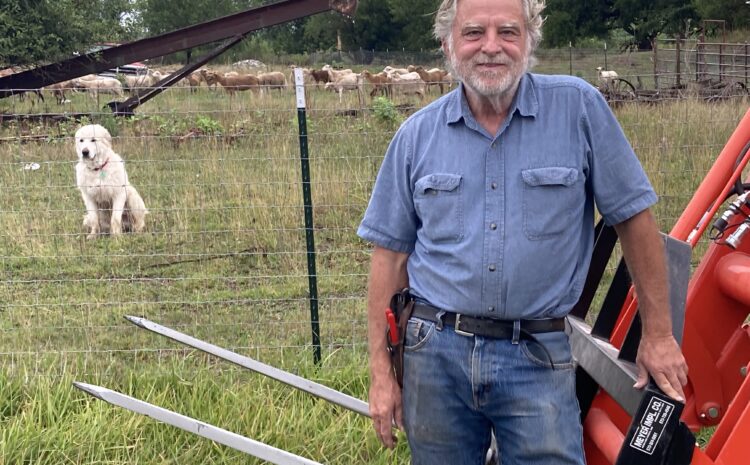
Nolan and Trisha Zachman raise pigs without gestation crates at Feathered Acres Learning Farm and Inn in Belgrade, Minnesota. They farm within the Niman Ranch network, which Trisha Zachman described as more than 600 independent family farmers committed to raising pork without the use of controversial 2-foot-by-7-foot crates in which most pork producers house pregnant sows.
For Zachman, Proposition 12 — a voter-passed California law regarding animal welfare — created a market her operation could compete in.
“We cannot out-scale large pork operations,” Zachman said in testimony opposing language in the Save Our Bacon Act, which seeks to use federal law to strike the enforcement of Prop 12 and similar laws in other states. “We cannot compete with the biggest companies by being the cheapest. But we can raise animals well, we can care for the land, and we can build trust with our customers.”
More than 60% of California voters in November 2018 approved Prop 12, which prohibits the sale of pork in California from breeding pigs housed in conditions deemed “cruel,” defined as any system that prevents an animal from “lying down, standing up, fully extending its limbs or turning around freely.” The practical requirement is a minimum of 24-square-feet per sow, which effectively bans the use of gestation crates for any producer who wants to sell into the California market. The U.S. Supreme Court upheld Prop 12 in May 2023 in a 5-4 ruling.
According to the USDA, California consumes far more pork than it produces. Pork producers across the U.S. who wanted access to California’s market would have to retrofit their barns or walk away.
While the Zachmans found opportunity in Prop 12, others in the pork industry see the law as an expensive and unnecessary burden on producers that has created higher prices for pork products. The National Pork Producers Council framed the issue in constitutional terms. CEO Bryan Humphreys argued that Prop 12 amounts to one state dictating farming practices in another, which he called a violation of basic principles of interstate commerce.
“The state of California should not be able to step outside of its borders and regulate swine farms in the state of Iowa,” Humphreys said at the World Pork Expo in June.
Since Prop 12 took effect Jan. 1, 2024, the fight over the use of gestation crates has grown into one of the most divisive battles in modern agricultural policy, pitting the National Pork Producers Council against animal welfare advocates, large pork packers against independent farmers, and Congress against itself. It’s also one of the sticking points around getting a new farm bill passed.
The science and dispute
Gestation crates are used to house sows for the entirety of their pregnancies, often referred to in the hog industry as “three months, three weeks and three days.” It’s a system the majority of American pork producers still use.
Gestation crates became standard in industrial pork production for practical reasons, according to proponents of them. They allow producers to feed sows individually, monitor their health closely and protect them from one another, as pigs are a social animal with a social hierarchy that can lead to fighting, according to Eric Weaver, assistant professor at South Dakota State University.
The American Veterinary Medical Association reviewed the research and reached no firm conclusion in favor of any particular system. It found advantages and disadvantages to gestation stalls, group pens and free-range situations and has not found evidence that one method of sow housing is better for animal health than another.
Prop 12 supporters argue the 24-square-foot standard acknowledges a basic reality about the animals being raised. Joe Maxwell, president of the Farm Action Fund and a fourth-generation hog farmer in Ladonia, Missouri, put it plainly.
“Just because you can cage her in a two-foot-by-seven-foot pen most all her life doesn’t mean you should,” Maxwell said. “My grandpa would have whooped me if I’d have caged an animal all its life.”
Maxwell’s farm has never used gestation crates. He raises hogs alongside sheep, row crops, hay and produce on a diversified operation in northeastern Missouri.
Kyle Garner, NPPC’s manager of congressional affairs, said the council’s concern extends beyond California. Animal welfare groups are pursuing a ballot initiative in Oklahoma that could require even larger housing, and producers who retrofitted to meet Prop 12 would be out of compliance under Oklahoma’s proposed rules, he said.
“If Oklahoma does it, Oregon can do it, Washington can do it,” Garner said. “It’s constantly a producer having to convert year after year after year.”
USDA’s Economic Research Service has tracked Prop 12’s effects since enforcement began. In a July 2025 letter to House Agriculture Committee Chairman GT Thompson, USDA Secretary Brooke Rollins summarized those findings.
Retrofitting or rebuilding facilities to meet the 24-square-foot standard costs an estimated $3,500 to $4,500 per sow, depending on region and scale of operation, according to ERS. As of April 2025, approximately 17% of U.S. pork producers had made or were making investments to comply, ERS estimated. By the first quarter of 2025, 12% of small pork operations — defined as fewer than 500 sows — had exited the market or shifted production away from breeding, citing regulatory uncertainty and high transition costs, according to ERS.
As predicted by many in the pork industry, the price effects in California have been pronounced, as retail pork prices in the state rose 18.7% each year through June 2025, compared with a 6.3% increase nationwide over the same period, according to ERS retail meat price data. The average price of pork loin in California climbed from $4.12 per pound in December 2023 to $4.89 per pound in June 2025, ERS reported. A USDA consumer affordability study from May 2025 found that low-income households in California reduced pork purchases by 22%.
Fight over the farm bill
The National Pork Producers Council made Prop 12 its top legislative priority heading into the 2026 debate over the farm bill. Its preferred vehicle was a provision known as the Save Our Bacon Act, which is language that would bar states from imposing their own production standards on livestock products sold across state lines.
The House-passed farm bill included that language. Rep. Brad Finstad, R-Minn., whose southern Minnesota district includes significant hog production, called it a cornerstone win.
“It is insane, risky policy when we have states like California and Massachusetts telling us they know better how to raise pigs than multi-generational farms that I represent in southern Minnesota,” Finstad said. “We haven’t stumbled upon the way we have our livestock management practices. We have invested millions of dollars over the years.”
Without a legislative fix, Finstad warned that hog operations would face a choice between spending millions to retrofit facilities for California compliance or exiting the market.
“We would see the largest consolidation and erosion of the family farm that we have seen in my generation,” he said.
The Save Our Bacon Act faces steeper odds in the Senate. Agriculture Committee Chairman John Boozman publicly stated that Prop 12 language would not be included in his version of the farm bill, which is a declaration that Garner said made the NPPC’s lobbying effort significantly harder.
“It makes having those conversations difficult,” Garner said. “Trying to get people to support us on Prop 12 — it’s challenging when it’s been said that it won’t be in the bill.”
The next development came on June 10, when Sen. Roger Marshall of Kansas, who had originally sponsored a previous version of the Save Our Bacon legislation known as the Ending Agricultural Trade Suppression Act, withdrew his cosponsorship of the Senate version, now known as the Food Security and Farm Protection Act.
Marshall’s office offered a brief explanation.
“With all of the challenges facing farm country right now, Senator Marshall is prioritizing year-round E15 and helping Chairman Boozman get a farm bill done,” said Payton Fuller, Marshall’s communications director.
The reaction divided sharply along the same fault lines that have defined the broader fight.
Farm Action Fund praised Marshall’s decision, saying the Save Our Bacon Act “takes away the right of states to set food standards, robs independent farmers of market opportunities, and further increases the power of corporate control over our food supply.”
The Organization for Competitive Markets went further, arguing the legislation would benefit foreign-linked corporations.
“The Save Our Bacon Act is a maneuver to increase its share of our domestic market,” said Mike Schultz, founder of the Kansas Cattlemen’s Association and vice president of OCM, referring to Chinese-linked pork processing interests.
The NPPC pushed back sharply. Rob Brenneman, an Iowa pork producer and NPPC president, said Marshall had been pressured into stepping away from a fight he once led.
“As farmers, we have watched these activist groups spend millions attacking anyone who dared challenge Proposition 12,” Brenneman said. “It is sad that we are watching one of the issue’s strongest champions, Senator Marshall, sit down and step away from a solution for which he once fought so vehemently.”
Zachman said the Save Our Bacon Act would eliminate the consumer-driven market she and other farmers had found by foregoing the use of gestation crates.
“It could take away one of the few markets that reward farmers for raising animals humanely,” she said. “It could wipe out years of investments by farmers who chose to meet the higher standards. This is not saving bacon. This is saving corporate control.”
Maxwell, at the Farm Action Fund, framed the debate in terms of market structure. He said that when he began raising hogs full time in the early 1980s, approximately 526,000 hog farmers operated in the U.S. Today, he said, roughly 69,000 remain. Four companies control 70% of all hogs, he said, and Prop 12 represents one of the few remaining market footholds for independent producers who don’t raise animals under contract for large packers.
Where things stand
NPPC’s fallback strategy if the Senate does not include anti-Prop 12 language in the farm bill is the conference process, which Garner said is the stage at which House and Senate negotiators reconcile differences between their respective bills. Senate allies who have cosponsored a standalone bill introduced by Sen. Joni Ernst include Sens. Chuck Grassley, Roger Marshall and John Cornyn, according to Garner. Marshall’s withdrawal from the Food Security and Farm Protection Act does not affect his cosponsorship of Ernst’s standalone bill, but Agweek’s request for clarification was not returned by Marshall’s office.
Rollins said in her letter that she supports a congressional fix.
“One state should not have the authority to dictate terms to another state, especially when producers know best how to care for their animals,” she wrote.
For Zachman, whose livelihood rests on the market Prop 12 created, the legislative outcome is personal.
“I want my children to grow up seeing that there is still a future in farming,” she said. “I want them to know that small farms can survive when consumers, voters and lawmakers stand with us.”
For the majority of producers whose barns were built for a different regulatory era, the wait for a congressional answer continues.
Reposted from https://www.agweek.com/news/policy/after-8-years-prop-12-still-creates-sizzling-debate-over-hog-confinement
By Noah Fish